
 October 12, 2026
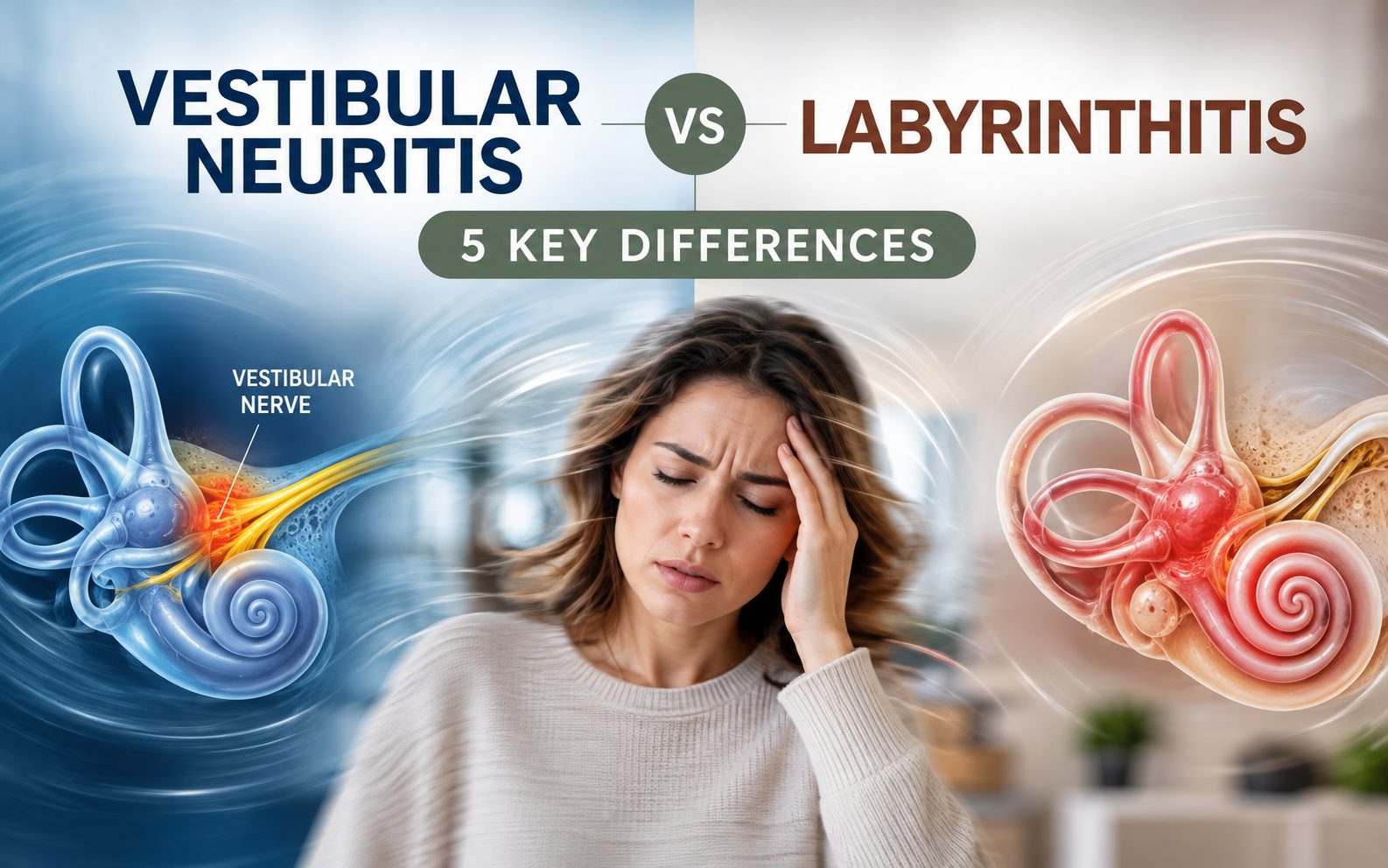
Vestibular Neuritis vs Labyrinthitis: 5 Key Differences
Written by Dr. Joseph Adams, D.C., M.S. Applied Clinical Neuroscience
Few symptoms are more alarming than suddenly feeling as though the entire room is spinning.
You may wake up dizzy, struggle to walk in a straight line, feel nauseated when you move your head, or need to hold onto the wall just to get across the room. It can be frightening, especially when you have never experienced anything like it before.
You're not alone.
Sudden, severe dizziness should be evaluated by a healthcare professional because several conditions can cause similar symptoms. Two possible causes are vestibular neuritis and labyrinthitis, conditions involving the balance structures of the inner ear.
Understanding vestibular neuritis vs labyrinthitis can help explain why sudden vertigo happens, how these conditions differ, and what recovery may look like.
They can feel very similar, but there is an important difference: vestibular neuritis primarily affects balance, while labyrinthitis can affect both balance and hearing.
And even after the initial problem begins to settle, recovery may not be finished. Your brain often needs time—and sometimes targeted rehabilitation—to recalibrate the way it processes balance information.
Your Inner Ear Is More Than Hearing
Most people think of the ears as hearing organs. But deep inside each ear is also a sophisticated balance system called the vestibular system.
Think of it as part of your body's built-in GPS.
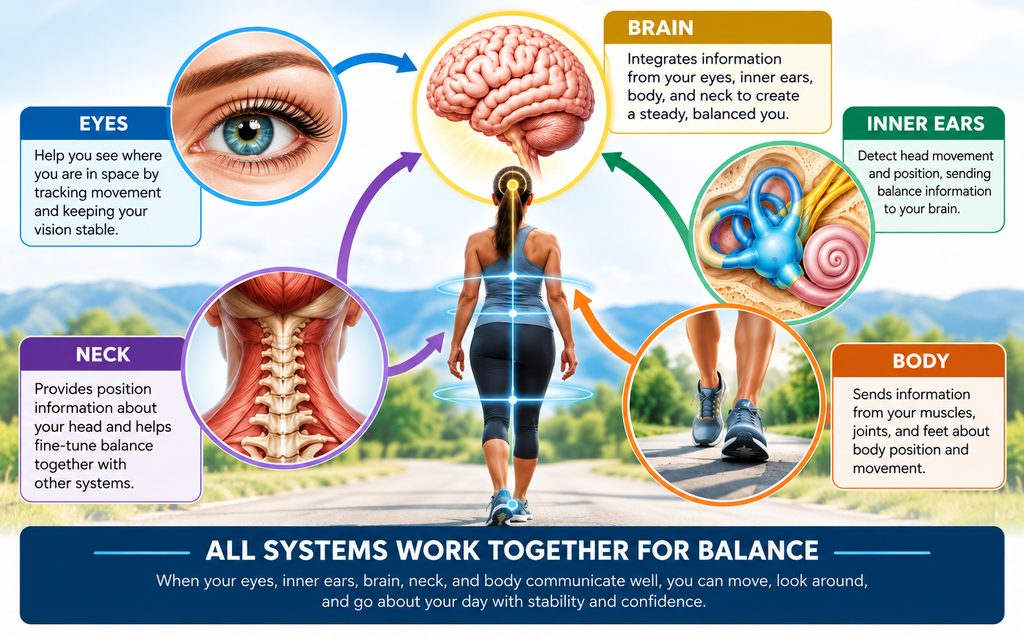
Your brain constantly compares information coming from several places:
- Your inner ears
- Your eyes
- Your muscles and joints
- Your neck and the position of your head and body
When these signals agree, you can turn your head, walk through a grocery store, bend down, or get out of bed without thinking much about your balance.
When one inner ear suddenly sends information that does not match the other, your brain has a problem to solve.
That mismatch can create an intense sensation of movement even when you are completely still.

Vestibular Neuritis vs Labyrinthitis: 5 Key Differences
Vestibular neuritis and labyrinthitis can cause very similar symptoms, including sudden vertigo, nausea, and difficulty maintaining balance. However, understanding the differences between these two conditions can help explain why symptoms vary and why the right diagnosis matters.
Here are five important differences to know.
1. The Part of the Inner Ear Affected
Vestibular neuritis primarily affects the vestibular nerve, which carries balance information from the inner ear to the brain.
Labyrinthitis involves the inner ear structures responsible for balance and hearing. This means labyrinthitis can interfere with both systems, while vestibular neuritis primarily disrupts balance.
2. Hearing Changes
This is one of the most important differences.
Vestibular neuritis typically does not cause hearing loss. Patients may experience intense dizziness and imbalance while their hearing remains normal.
Labyrinthitis, however, can cause hearing changes, including hearing loss or ringing in the ears (tinnitus).
Sudden hearing loss, especially in one ear, requires prompt medical evaluation.
3. Symptoms You May Experience
Both conditions can cause severe spinning sensations, nausea, difficulty walking, and sensitivity to head movement.
With vestibular neuritis, symptoms primarily involve balance and spatial orientation.
With labyrinthitis, those same balance symptoms may occur alongside hearing-related complaints.
The symptoms overlap considerably, which is why dizziness alone cannot reliably distinguish the two.
4. How Recovery May Differ
Both conditions can leave patients feeling unsteady even after the intense spinning has improved.
With vestibular neuritis, recovery often involves the brain gradually adapting to changes in balance information.
With labyrinthitis, that same adaptation may be necessary, but hearing symptoms can also affect the recovery experience. Some hearing changes may persist and require additional evaluation.
Recovery varies from person to person.
5. What Treatment and Rehabilitation May Involve
Both conditions may require medical management during the acute stage, followed by vestibular rehabilitation when lingering balance problems remain.
For vestibular neuritis, rehabilitation may focus on gaze stabilization, balance training, and helping the brain compensate for altered vestibular signals.
Patients recovering from labyrinthitis may benefit from similar rehabilitation, but hearing changes can also require evaluation and management by an appropriate medical specialist.
The goal is not to treat every dizzy patient the same way. Understanding which systems are affected allows treatment to be more specific to the patient's needs.
What Causes Vestibular Neuritis or Labyrinthitis?
These conditions may occur in association with viral illnesses or inflammatory processes affecting the inner ear or vestibular nerve. The exact cause is not always clear in an individual patient.
But the immediate problem is only part of the story.
Once one vestibular system becomes weaker than the other, the brain has to learn how to function with that changed information.
This adaptation process is called central compensation.
Think about wearing one shoe with a much thicker sole than the other. At first, everything feels uneven. With repeated movement, your brain gradually learns how to account for the difference.
A similar process can occur after a vestibular injury.
Why You May Still Feel Dizzy After The Spinning Stops
The severe spinning may improve before you feel fully steady. Quick head movements, busy grocery stores, visual motion, or walking while looking around may still trigger symptoms.
That can happen while the brain is adapting to the changed balance signals, a process called central compensation. Recovery is different for everyone and may depend on the initial vestibular loss, hearing involvement, and other health factors. Persistent symptoms deserve evaluation rather than an assumption that inflammation is ongoing.
When to Seek Emergency Care
New, sudden, or severe dizziness should not automatically be assumed to be an inner-ear condition.
Stroke and other neurological or cardiovascular problems can sometimes cause dizziness or imbalance.
Call 911 or seek emergency medical attention for dizziness accompanied by symptoms such as:
- New weakness or numbness of the face, arm, or leg
- Difficulty speaking or understanding speech
- New double vision or vision loss
- Severe difficulty walking or coordinating movement
- Fainting or loss of consciousness
- A sudden, severe or unusual headache
- Chest pain or other concerning cardiovascular symptoms
Sudden new hearing loss also deserves prompt medical evaluation.
When there is uncertainty, it is safer to seek appropriate medical assessment rather than assuming the problem is vestibular neuritis or labyrinthitis.
How We Evaluate Vestibular Neuritis and Labyrinthitis
At Calibration Brain and Body, we look beyond the word “dizziness” and examine how the different systems responsible for balance are functioning together.
Depending on the patient's history and symptoms, an evaluation may include:
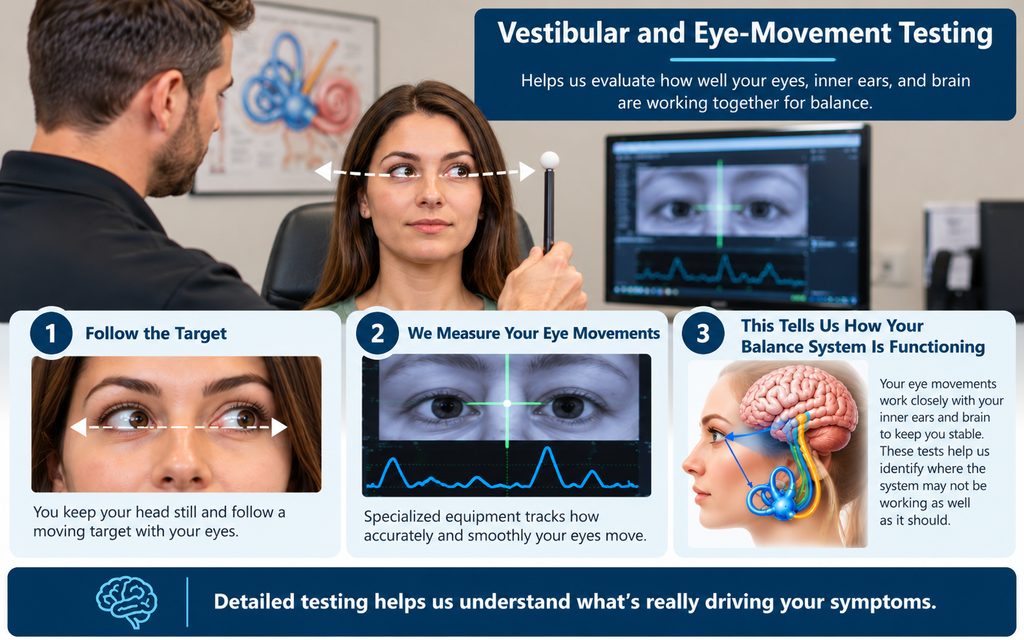
- Eye-movement testing
- Vestibular testing
- Vestibulo-ocular reflex, or VOR, testing
- Balance and postural testing
- Gait and coordination assessment
- Neurological screening
- Positional testing when BPPV is a possibility
- Cervical spine and neck assessment when appropriate
- Functional movement testing
Why look at the eyes when the problem started in the ear?
Because the vestibular system and eyes work together every time you move your head.
Your vestibulo-ocular reflex helps keep your vision stable while your head is moving. When that system is not functioning or compensating appropriately, activities as simple as walking while looking around can become uncomfortable.
A thorough evaluation helps determine what is actually driving the remaining symptoms.
How Is Vestibular Neuritis or Labyrinthitis Treated?
Treatment depends on the stage of the condition, the severity of symptoms, the suspected cause, hearing involvement, and what is found during the examination.
Medical evaluation may be needed during the acute stage, particularly when symptoms are severe or hearing has changed.
For patients dealing with lingering vestibular problems, rehabilitation focuses on helping the brain adapt to the altered balance signals.
Depending on the findings, care at Calibration may include:
- Vestibular rehabilitation exercises
- Gaze-stabilization exercises
- Ocular rehabilitation and visual tracking exercises
- Balance and gait retraining
- Functional neurological rehabilitation
- Coordination exercises
- Cervical spine treatment when neck findings are relevant
- Individualized home exercises
- Lifestyle recommendations that support recovery
Not every patient needs every treatment.
When It May Be Something Else
Vertigo and imbalance are symptoms, not diagnoses.
Other conditions that can produce dizziness or similar sensations include:
- BPPV
- Vestibular migraine
- Ménière's disease
- Persistent postural-perceptual dizziness (PPPD)
- Concussion
- Cervicogenic dizziness
- Medication effects
- Blood pressure or cardiovascular problems
- Other neurological conditions
To read more about other causes: Dizziness Causes
This is one reason treating every dizzy patient with the same exercise or maneuver does not make sense.
A maneuver used for BPPV, for example, addresses a very different mechanism than vestibular rehabilitation for a weakened vestibular system.
When the diagnosis is right, treatment can be matched much more precisely to the problem.
You Don't Have to Keep Guessing About Your Dizziness
Vestibular neuritis and labyrinthitis can make it feel like your world has suddenly been turned upside down.
The encouraging part is that the nervous system is capable of adaptation. For many patients, recovery involves not only allowing the initial condition to settle but also helping the brain become more effective at interpreting and integrating balance information again.
At Calibration Brain and Body in Mansfield, we perform detailed neurological, vestibular, and/or orthopedic assessments to determine what is actually contributing to your symptoms. If appropriate, we build a care plan based on your specific findings rather than guessing.
Calibration Brain and Body
408 South Main Street, Suite B
Mansfield, TX 76063
(817) 779-3435
We see patients from Mansfield, Arlington, Grand Prairie, Midlothian, and surrounding communities.
Frequently Asked Questions
How long does vestibular neuritis last?
The most intense vertigo may last for hours to days, while imbalance, motion sensitivity, or other symptoms can continue longer as the brain compensates. Recovery varies from person to person, so persistent symptoms should be evaluated rather than assumed to follow a particular timeline.
Can vestibular rehabilitation help after vestibular neuritis?
Vestibular rehabilitation is commonly used when imbalance, gaze instability, motion sensitivity, or dizziness persist after a vestibular problem. The exercises should be selected based on the individual's findings rather than giving every patient the same program.
Should I keep moving if movement makes me dizzy?
Complete long-term avoidance of movement may make vestibular compensation more difficult for some patients, but that does not mean you should force yourself through severe symptoms. The appropriate amount and type of movement depends on the diagnosis, stage of recovery, and individual examination findings.
How do I know whether my vertigo is BPPV or vestibular neuritis?
The timing and triggers can provide clues. BPPV commonly causes brief episodes of vertigo associated with specific head positions, while vestibular neuritis often causes a more prolonged episode of vertigo followed by lingering imbalance or motion sensitivity. Because several conditions can overlap or mimic one another, examination and vestibular testing can help distinguish them.
For more information visit: John Hopkins Medicine
Disclaimer
This article is for educational purposes only and is not a substitute for medical advice, diagnosis, or emergency care. If you are experiencing severe, sudden, or concerning symptoms, seek urgent medical attention.