
- Quick Answer: What You Need to Know About Concussions
- More Than “Getting Your Bell Rung”: Understanding Concussions
- Recognizing Concussion Symptoms: From the Obvious to the Overlooked
- Why Does It Take So Long? Understanding What Prolongs Recovery
- Do Not Wait: Concussion Red Flags That Require Immediate Medical Attention
- Getting the Full Picture: Our Comprehensive Concussion Assessment
- A Structured Path Forward: Your Personalized Recovery Plan
- Evidence-Informed Care: What the Research Tells Us
- A Path Back to Normal: What Recovery Can Look Like
- Still Not Yourself After a Concussion? Here’s What’s Really Going On.
- Download Your Free Concussion Recovery Guide
- References + Medical Review
- Your Questions, Answered: Concussion FAQs

Concussion Treatment in Mansfield, TX: Evidence-Based, Non-Surgical Care
Content Reviewed By: Dr. Joseph Adams, D.C., M.S. on August 12, 2026
Chiropractic License Number: 13522 (NPI: 1972026367)
Table of Contents
- Quick Answer: What You Need to Know About Concussions
- More Than “Getting Your Bell Rung”: Understanding Concussions
- Recognizing Concussion Symptoms: From the Obvious to the Overlooked
- Why Does It Take So Long? Understanding What Prolongs Recovery
- Do Not Wait: Concussion Red Flags That Require Immediate Medical Attention
- Getting the Full Picture: Our Comprehensive Concussion Assessment
- A Structured Path Forward: Your Personalized Recovery Plan
- Evidence-Informed Care: What the Research Tells Us
- A Path Back to Normal: What Recovery Can Look Like
- Still Not Yourself After a Concussion? Here’s What’s Really Going On.
- Download Your Free Concussion Recovery Guide
- References + Medical Review
- Your Questions, Answered: Concussion FAQs
This content is educational and not a substitute for medical diagnosis. If you have red flag symptoms or a medical emergency, seek urgent care.
Quick Answer: What You Need to Know About Concussions
A concussion is a mild traumatic brain injury caused by a bump, blow, or jolt to the head that disrupts normal brain function. Common causes include sports impacts, car accidents, falls, and whiplash-type forces that do not always involve direct head contact. Most people recover within a few weeks with appropriate rest and a graduated return to activity. When symptoms persist beyond four weeks, the condition is often called post-concussion syndrome, and a more structured care plan becomes necessary.
First-line care typically includes physical and cognitive rest followed by a supervised, gradual return to normal activity. If you or someone you know experiences loss of consciousness, repeated vomiting, severe or worsening headache, one pupil larger than the other, slurred speech, or extreme confusion after a head injury, go to the emergency room immediately. These are signs of a potentially serious injury that requires urgent medical evaluation.

More Than “Getting Your Bell Rung”: Understanding Concussions
A concussion is a functional brain injury, meaning it changes the way your brain works rather than causing visible structural damage. When the head or body experiences a sudden force, the brain shifts rapidly inside the skull. This movement disrupts the electrochemical environment that neurons depend on to communicate, triggering a cascade of metabolic changes that can affect vision, balance, mood, and sleep.
This is why standard MRIs and CT scans often come back normal after a concussion. Those tools are designed to detect structural damage, such as bleeding or fractures. A concussion is a disruption in function, not anatomy, which means it requires functional testing to identify and address properly.
Concussions are often categorized as acute, meaning symptoms lasting fewer than four weeks, or persistent. Persistent concussion symptoms are sometimes called post-concussion syndrome, and they can continue for months or even years. Research suggests that between 10 and 30 percent of individuals who sustain a concussion go on to experience prolonged symptoms. Athletes, individuals with a history of prior concussions, and those whose initial recovery was not properly managed are at greater risk.
Two common myths worth addressing:
Myth 1: You need to lose consciousness to have a concussion. The majority of concussions do not involve any loss of consciousness. Brief disorientation, feeling foggy, or simply not feeling right after a head impact can all be signs of a concussion, even if you stayed awake and seemed fine at the time.
Myth 2: If symptoms are not severe, you can push through and return to normal activity right away. Rest and a carefully managed return to activity are critical parts of early recovery. Ignoring symptoms and returning to demanding physical or cognitive tasks too quickly can slow recovery and, in rare cases, increase the risk of serious complications.

Recognizing Concussion Symptoms: From the Obvious to the Overlooked
Concussion symptoms are wide-ranging, which is one reason they are so often misunderstood or attributed to other causes. The most commonly reported symptoms include:
- Headache or a feeling of pressure in the head
- Dizziness or a sense that the room is spinning
- Nausea, sometimes with vomiting in the acute phase
- Blurred or double vision
- Sensitivity to light (photophobia) and noise (phonophobia)
- Difficulty concentrating or thinking clearly
- Memory problems, including gaps around the injury event
- Fatigue that feels out of proportion to activity level
- Sleep changes, including difficulty falling asleep or sleeping far more than usual
- Mood changes, including irritability, anxiety, or a low mood that feels unfamiliar
Many of these symptoms are easy to explain away in everyday life. A headache could be stress. Fatigue could be a poor night of sleep. Brain fog could be a busy week. This is why concussions are frequently missed or under-managed, especially when the initial injury seemed minor.
What often surprises patients is how deeply these symptoms affect daily function. Reading for long periods becomes difficult when the eyes can no longer track smoothly across a page. Crowded environments become overwhelming when the brain is struggling to filter competing sensory input. Exercise provokes headaches. Screens trigger fatigue. Even a conversation in a noisy restaurant can feel like too much.
Sleep and mood are two of the most underappreciated areas of impact. Many concussion patients report significant disruption to their sleep architecture, including difficulty reaching deep sleep, waking frequently, or feeling unrefreshed even after a full night. Mood changes, including increased irritability, emotional sensitivity, and low motivation, are thought to be related to disruptions in neurochemistry and the ongoing stress that chronic symptoms place on the nervous system.
Symptoms tend to worsen with activities that tax the brain: screens, reading, loud environments, exercise, mental effort, and social situations that require sustained attention. Periods of quiet rest typically provide temporary relief, but true resolution requires a targeted rehabilitation approach, not simply waiting things out.

Why Does It Take So Long? Understanding What Prolongs Concussion Recovery
Not everyone who sustains a concussion recovers on the same timeline. Several factors influence how quickly and completely the brain and nervous system return to baseline, and understanding them helps explain why a personalized approach to care makes such a significant difference.
Cervical Spine Involvement
Cervical spine dysfunction is one of the most commonly overlooked contributors to prolonged concussion symptoms. The same forces that injure the brain during a concussion also strain the muscles, joints, and ligaments of the neck. Dysfunction, particularly at the upper cervical levels, can generate headaches, dizziness, and balance problems that are difficult to distinguish from purely neurological concussion symptoms. When this piece is missed in assessment, patients can plateau in recovery without understanding why.
Vestibular Dysfunction
The vestibular system, which includes structures in the inner ear and their connections to the brain, plays a central role in balance, spatial orientation, and gaze stability. A concussion can disrupt these pathways, leading to dizziness, nausea with movement, difficulty navigating visually complex environments, and a general sense of being off. Without targeted vestibular rehabilitation, these symptoms often persist even as other aspects of recovery improve.
Visual System Disruption
The brain dedicates an enormous amount of processing power to visual function. After a concussion, many patients struggle with convergence insufficiency (difficulty keeping the eyes focused on a near target), saccadic dysfunction (the ability to move the eyes quickly and accurately between targets), and difficulty maintaining stable gaze while the head is moving. These issues contribute to reading difficulties, screen sensitivity, and trouble navigating busy environments.
Lifestyle and Physiological Factors
Poor sleep impairs the brain’s ability to clear metabolic waste and consolidate healing. High stress loads keep the nervous system in a state of sympathetic activation that is counterproductive to recovery. Nutritional deficiencies, particularly in omega-3 fatty acids, magnesium, and B vitamins, can impair the neurochemical environment the brain needs to heal. Hormonal dysregulation, which can follow trauma, may also contribute to fatigue, mood changes, and cognitive difficulties that persist well beyond the initial injury.
Return-to-Activity Mismanagement
Returning to full activity before the brain has had adequate time to stabilize, or returning without a graduated, symptom-monitored protocol, can keep the nervous system in a state of chronic irritation and delay recovery by weeks or months. A structured return-to-activity plan is not optional. It is a core component of concussion management.

Do Not Wait: Concussion Red Flags That Require Immediate Medical Attention
While most concussions are managed conservatively, certain symptoms following a head injury indicate a more serious condition that requires emergency evaluation. If you or someone you know experiences any of the following after a head impact, go to the nearest emergency room or call 911 immediately.
Neurological Red Flags:
- Loss of consciousness lasting more than a few seconds
- Repeated vomiting
- One pupil that is larger than the other, or pupils that respond differently to light
- Seizures or convulsions
- Extreme confusion, agitation, or inability to recognize familiar people or surroundings
- Slurred speech or difficulty forming words
- Weakness, numbness, or loss of coordination in the arms or legs
Structural and Systemic Red Flags:
- Worsening headache that does not improve with rest
- Clear fluid draining from the nose or ears (possible sign of a skull fracture)
- Deteriorating consciousness or increasing drowsiness that cannot be interrupted
- Injury from a high-speed collision, fall from significant height, or projectile impact
These symptoms may indicate bleeding around or within the brain, a skull fracture, or other structural injury that requires imaging and emergency intervention. A concussion rehabilitation clinic is not the right first stop in these situations. Once serious structural injury has been ruled out by a medical provider and symptoms are consistent with a concussion or post-concussion syndrome, specialized rehabilitation care becomes the appropriate next step.

Getting the Full Picture: Our Comprehensive Concussion Assessment
No two concussions present the same way, which is why a thorough, individualized assessment is the foundation of effective care. At Calibration Brain and Body, the evaluation process is designed to identify not just your current symptoms, but the specific neurological, musculoskeletal, and physiological systems contributing to them.
Your first visit begins with a detailed history. We take the time to hear your full story, including how the injury happened, what your symptoms are, how they have changed over time, what makes them better or worse, and how they are affecting your work, sleep, exercise, and relationships. This context matters as much as any clinical test.
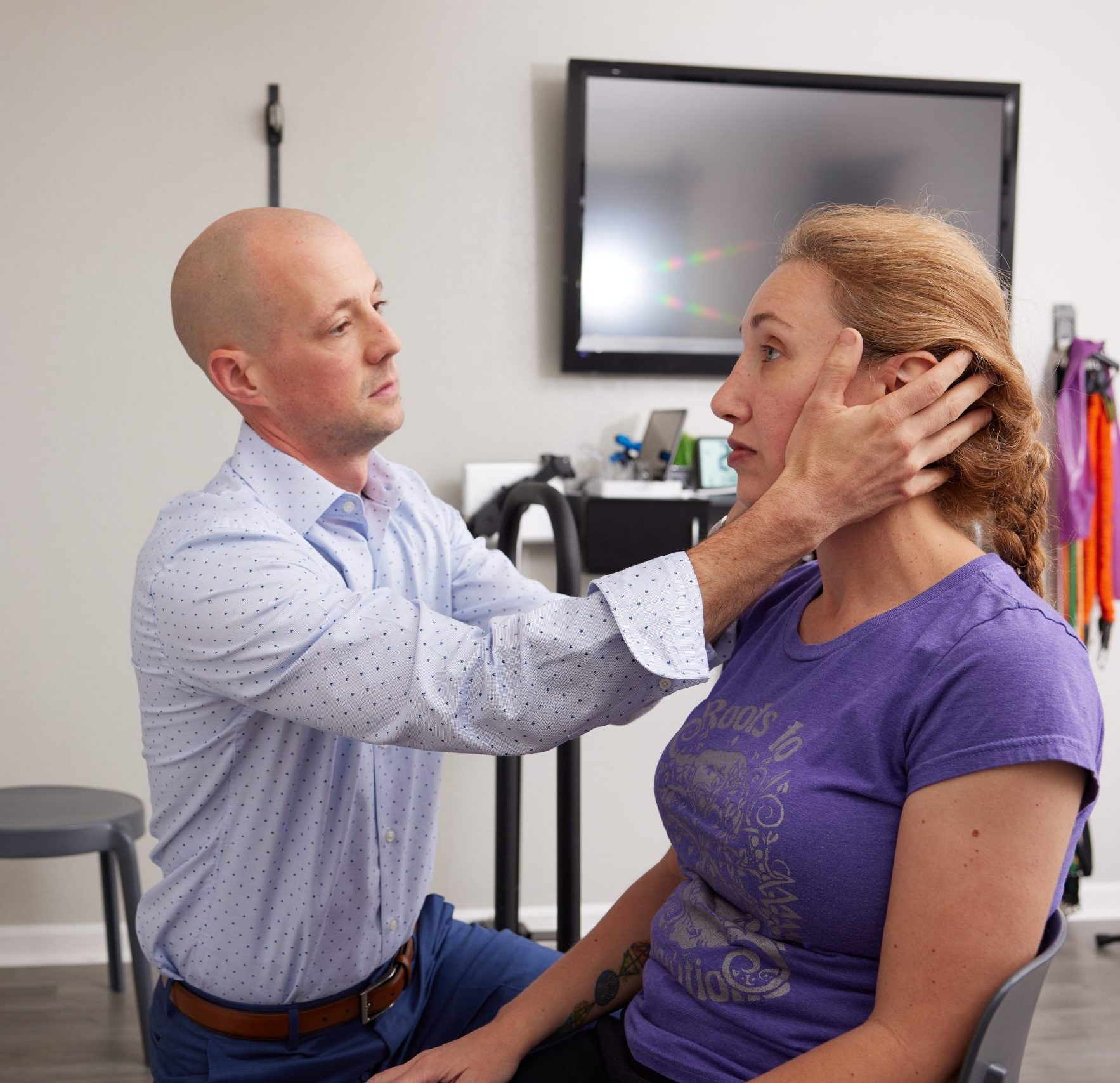
The physical examination that follows is multisystem. We assess cervical spine mobility and joint function, looking for restrictions or instability in the upper neck that may be contributing to headaches and dizziness. We evaluate neurological function through a series of assessments that examine eye movement including tracking, convergence, and saccades, vestibular function and balance, coordination, proprioception, and cognitive processing speed.
Dynamic vision testing is a core component of our assessment. The ability of the eyes to work together, hold a stable target while the head moves, and shift gaze accurately between targets is often compromised after a concussion. These deficits can be subtle but carry a significant impact on daily life, and they are frequently missed in standard clinical evaluations.
We also consider the broader physiological picture. Depending on your presentation, we may evaluate hormonal and gut health markers, given the well-established relationship between neuroinflammation, the gut-brain axis, and recovery outcomes.
Imaging such as MRI or CT is not typically indicated for concussion once serious structural injury has been ruled out. Standard imaging does not detect the functional changes associated with concussion or post-concussion syndrome. In cases where red flag symptoms are present or where the mechanism of injury warrants it, we make appropriate referrals for imaging without hesitation.
Our goal with the assessment is not simply to name your condition. It is to understand precisely what is driving your symptoms so that your care plan addresses the right targets in the right sequence.
A Structured Path Forward: Your Personalized Concussion Recovery Plan
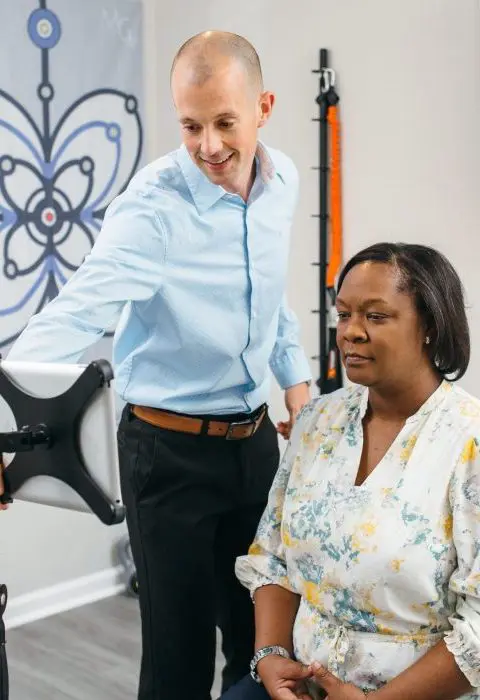
Effective concussion rehabilitation is not a single treatment applied repeatedly. It is a phased process that meets your nervous system where it is, builds capacity gradually, and adapts as you progress. The following framework reflects how care is structured, though every plan is tailored to the individual.
Phase 1: Calm the System
In the earliest phase of care, the primary goal is to reduce the neurological irritability that is driving your most acute symptoms. For patients with significant light sensitivity, headaches, and cognitive overload, this phase involves carefully managed cognitive and physical demands, gentle cervical soft tissue work to reduce muscular tension, early-stage vestibular regulation exercises, and vagal nerve stimulation to shift the nervous system toward a parasympathetic healing state. Inflammatory load is addressed through nutritional support when indicated.
Phase 2: Restore Function
As symptom irritability decreases, the focus shifts to actively retraining the systems that were disrupted. Vestibular rehabilitation exercises progressively challenge gaze stability, balance, and spatial orientation. Dynamic vision therapy addresses convergence, tracking, and saccadic accuracy. Cervical mobilization and manipulation restore joint motion and proprioceptive input from the upper neck. Neurological rehabilitation exercises are introduced to rebuild specific brain pathways involved in coordination, cognitive processing, and sensory integration.
Phase 3: Rebuild Capacity
With core function restored, care progresses to loading the system more robustly. Exercise tolerance is gradually increased through a monitored return-to-exertion protocol. Cognitive demands are incrementally reintroduced in a structured way. Patients are guided through progressively more challenging balance and coordination tasks, real-world exposure to visually complex environments, and activity-specific preparation for return to sport, work, or school.
Phase 4: Return to Life
The final phase is a supported transition back to full activity. For student athletes, this follows established return-to-sport and return-to-learn protocols with appropriate checkpoints. For working adults, it involves a graduated return to full cognitive and physical workload. We track objective markers of function throughout this phase to ensure the nervous system has genuinely recovered, not simply adapted around existing deficits.
Adjunct Technologies Used When Appropriate
Class IV Laser therapy may be incorporated when neuroinflammation and cervical soft tissue involvement are contributing to symptom persistence. The laser accelerates cellular healing, reduces inflammation, and improves circulation in affected tissues.
Shockwave therapy is considered for patients with significant myofascial tension or soft tissue dysfunction in the cervical and thoracic regions that is contributing to headaches and restricted mobility.
Vagal nerve stimulation supports nervous system regulation, reduces systemic inflammation, and improves the overall healing environment. It is particularly helpful for patients whose autonomic nervous system function has been disrupted.
Spinal decompression may be appropriate in cases where concurrent cervical disc involvement is contributing to symptoms such as neck pain, radiating arm symptoms, or headaches with a cervicogenic component.
Clinical note: Not every modality is right for every patient. The technologies we select and the sequence in which we apply them are determined by your individual assessment findings, your symptom profile, and how your nervous system responds to care. Our goal is to use the most effective combination for your specific case.
Evidence-Informed Care: What the Research Tells Us About Concussion Recovery
The science of concussion rehabilitation has advanced considerably over the past decade. The following evidence summary highlights key findings that inform our approach.
Multidisciplinary rehabilitation outperforms passive rest.
A growing body of research, including guidelines from the Ontario Neurotrauma Foundation and the Concussion in Sport Group, supports active, multidisciplinary rehabilitation over passive rest alone. Passive rest beyond the first 24 to 48 hours has not been shown to improve outcomes and may prolong recovery in some populations. These guidelines apply broadly to individuals with persistent post-concussion symptoms. Limitation: most studies have focused on sports-related concussions, and evidence for optimal management in occupational and non-sport populations is still developing.
Cervical spine treatment reduces post-concussion headaches.
Research in populations with persistent post-concussion headache has found that cervical spine manual therapy and exercise can significantly reduce headache frequency and intensity, particularly when upper cervical dysfunction is present. Limitation: identifying which patients benefit from cervical intervention requires careful clinical assessment to differentiate cervicogenic from neurological sources of headache.
Vestibular rehabilitation is effective for post-concussion dizziness.
Multiple randomized controlled trials and systematic reviews support vestibular rehabilitation therapy as an effective intervention for dizziness, balance dysfunction, and gaze instability following concussion. These findings are well-established across age groups including adolescents, young adults, and older adults. Limitation: optimal dosage and exercise parameters vary by patient, and response time differs significantly between individuals.
Graduated aerobic exercise supports recovery.
Research from the University of Buffalo and sport medicine literature demonstrates that supervised, sub-symptom-threshold aerobic exercise can accelerate recovery in individuals with persistent concussion symptoms, particularly those with autonomic dysfunction. This applies to patients who have been cleared of structural injury and are medically stable. Limitation: exercise must be carefully dosed and monitored. Exceeding the symptom threshold can temporarily worsen recovery.
Visual rehabilitation addresses reading and screen sensitivity.
Emerging research and clinical evidence support oculomotor and visual rehabilitation for post-concussion vision symptoms, including convergence insufficiency, accommodation difficulties, and saccadic dysfunction. These interventions have shown measurable improvements in reading speed, visual endurance, and screen tolerance. Limitation: this is an area of active research, and standardized protocols are still being refined across clinical settings.

A Path Back to Normal: What Recovery Can Look Like
De-identified case study. Presented for informational purposes only. Individual outcomes vary. This case does not constitute a guarantee of results.
Patient Profile: A 16-year-old high school soccer player presented to our clinic six weeks after sustaining a concussion during a match. She had been seen in the emergency room at the time of injury, where imaging was normal and she was advised to rest and follow up with her primary care physician. She had been cleared to return to school but remained off sport due to persistent symptoms.
Baseline Limitations: At the time of her initial evaluation, she was unable to tolerate more than 60 minutes of school before her symptoms became unmanageable. Screen time was limited to 20 to 30 minutes before triggering headaches. She had not been able to exercise without provoking significant head pain. Reported symptoms included daily headaches rated 5 to 7 out of 10 in severity, light sensitivity, dizziness with head movement, difficulty reading, brain fog, and disrupted sleep.
Assessment Findings: The evaluation identified restricted upper cervical mobility with associated muscular tension and tenderness, significant vestibular hypersensitivity with provocation of dizziness during standard head movement testing, convergence insufficiency with a near point of convergence of 12 cm (normal is approximately 6 cm or less), reduced saccadic accuracy, and elevated symptom scores on cognitive and balance assessments relative to age-matched norms.
Plan Duration: 10 weeks of active care followed by a return-to-sport protocol.
Interventions Used: Cervical soft tissue therapy and joint mobilization, vestibular habituation and gaze stabilization exercises, vision therapy targeting convergence and saccadic accuracy, progressive aerobic exercise below her symptom threshold, neurological rehabilitation exercises, vagal nerve stimulation for autonomic support, and nutritional guidance including omega-3 supplementation.
Recovery Milestones:
- Week 2: Daily headache severity decreased from a 5 to 7 range down to a 2 to 3 range. Full school day tolerated with scheduled breaks.
- Week 4: Screen tolerance increased to two hours. Sub-threshold aerobic exercise completed without symptom provocation. Near point of convergence improved to 8 cm.
- Week 8 and beyond: Graduated return-to-play protocol completed through all stages with no symptom provocation. Full practice returned.
Outcome Metrics:
Headaches resolved to a 0 to 1 average. Balance and cognitive assessment scores returned to normal range. Light sensitivity resolved. Full reading tolerance restored. Sleep normalized. Patient reported full confidence in return to play.
Maintenance Plan: A home exercise program was provided including vestibular and vision maintenance exercises. A one-month follow-up was scheduled to confirm continued stability, coordinated with the patient’s athletic trainer for return-to-game clearance.

Watch: Why Concussion Symptoms Can Linger
If you are still experiencing symptoms after a concussion, this video breaks down why recovery is not always straightforward. Watch the video below to learn what may be contributing to ongoing headaches, dizziness, brain fog, light sensitivity, or trouble focusing, and how a more detailed assessment can help guide the next step in your recovery.
Download Your Free Concussion Recovery Guide
If you or someone you love has recently experienced a concussion, or is still struggling with symptoms weeks or months later, this free guide gives you a clear starting point. Inside, you’ll find a plain-language explanation of post-concussion syndrome, a symptom tracking worksheet, a quick reference guide to red flags, Nutritional Guidance and a framework for understanding the recovery process.

Your First Step Starts Here: Concussion Care in Mansfield, TX
You’ve spent enough time feeling like something is off without getting real answers. At Calibration Brain and Body in Mansfield, Texas, we specialize in the kind of comprehensive, individualized care that post-concussion patients actually need. Not a one-size-fits-all protocol. Not another provider who tells you to wait it out.
Your first visit is a conversation. You’ll have the time and space to share your full story, ask your questions, and understand exactly what is driving your symptoms before any treatment begins. Our team takes on complex neurological cases because we believe that people dealing with persistent, life-altering symptoms deserve providers who are genuinely invested in getting to the bottom of what is happening.
We see patients from across the greater Mansfield area, including Arlington, Grand Prairie, Midlothian, and the surrounding communities. Whether your concussion happened last month or two years ago, it is not too late to pursue targeted, evidence-informed care.

References and Medical Review
American College of Physicians guideline summary, published by American Family Physician: Noninvasive Treatments for Acute, Subacute, and Chronic Low Back Pain. (AAFP)
NICE Guideline NG59: Low Back Pain and Sciatica in Over 16s, Assessment and Management. (NICE)
American Family Physician: Chronic Low Back Pain in Adults, Evaluation and Management. (AAFP)
American Family Physician: Diagnosis and Treatment of Acute Low Back Pain. (AAFP)
World Health Organization: Guideline for Non-Surgical Management of Chronic Primary Low Back Pain in Adults. (World Health Organization)
Cochrane: Low-Level Laser Therapy for Low-Back Pain. (Cochrane)
Macario A, Pergolizzi J. Systematic Literature Review of Spinal Decompression via Motorized Traction for Chronic Discogenic Low Back Pain.
Yue L, et al. Extracorporeal Shockwave Therapy for Treating Chronic Low Back Pain, systematic review and meta-analysis. (PubMed)
What Our Patients Are Saying
Meet The Team

DR. JOSEPH ADAMS D.C., M.S.
Doctor of Chiropractic, MS Clinical Neuroscience
NPI: 1972026367
Texas Chiropractic License Number: 140672
Dr. Joe has a passion for helping people with significant health challenges through integrated care that includes chiropractic, functional neurology, vestibular rehabilitation, neuro-ophthalmology, and physical therapy. He loves helping people who are suffering through head pain (migraines, headaches, etc.) and neurological conditions find answers, solutions, and healing.
As a lifelong learner, he is always pursuing more education on how to best help his patients using the most advanced care applications. He fulfilled his residency at an integrated neurological rehabilitation center where he focused on providing chiropractic care to some of the most challenging cases. He also gained insight into functional and integrated medicine, along with post-graduate training in neurology. In his free time he uses his skills in welding and woodworking to build furniture and other home decor. He is usually spending his time with his wife (Dr. Jordan) and their two young children. He enjoys all kinds of fitness, especially weight lifting and yoga.
EDUCATION:
- Doctor of Chiropractic – Cum Laude (Parker University)
- Masters Degree in Applied Clinical Neuroscience (Parker University)
- Postgraduate Migraine Management
COMMUNITY INVOLVEMENT:
- Texas Chiropractic Association, Education and Events Committee
- Continuing Education Provider for other chiropractors
- Mansfield Police Department, Training Advisory Board
- Mansfield Area Chamber of Commerce, Former Board Member
- Rotary Club of Mansfield, Former Board Member

DR. JORDAN ADAMS D.C., M.S., CST
Doctor of Chiropractic, MS Clinical Nutrition, Craniosacral Therapy
NPI: 1184131708
Texas Chiropractic License Number: 13570
Dr. Jordan’s mission is to help others create more harmony in their life. Whether that’s a gentle word or a gentle adjustment. She approaches care from a mind + body perspective, empowering individuals to experience a deeper level of health, balance, and connection at every stage of their journey.
As a co-founder of Calibration Brain & Body, Dr. Jordan guides her patients and community toward more aligned living through gentle chiropractic care, craniosacral therapy, nutrition, community-centered yoga, and inspirational writing.Dr. Jordan has a special passion for infants and new moms, helping to support the transitions in this stage of life. She holds additional training in prenatal chiropractic care and is Webster Certified to provide specific support throughout pregnancy. She draws on her craniosacral training to help nurture the infant’s sensitive nervous system into a state of ease and balance.
Outside the office and off the yoga mat, Dr. Jordan can often be found adventuring outdoors on horseback, playing games with her kids, getting lost in a good book, writing poetry, or roping her husband (Dr. Joe) into their next creative home DIY project.
EDUCATION:
- Doctor of Chiropractic – Salutatorian; Magna Cum Laude; JWP Service Award (Parker University)
- Craniosacral Therapy Certified – Dynamic Body Balancing
- 500 hour yoga instructor + prenatal certified
- Postgraduate training in prenatal, pediatrics, functional nutrition
COMMUNITY INVOLVEMENT:
- Texas Chiropractic Association: Education and Event Committee
- Published Author: Pathways To Family Wellness and Plaid for Women
- Mansfield Park Facilities Development Corporation, Former Board Member

OLGA
Future Chiropractor / Rehab Team
Hi! Moving from Russia to explore the Fitness & Wellness field I found myself in healthcare helping the best Doctors of Chiropractic in Texas. I enjoy spending time outside, hanging out with my two boys – Pistol and Bullet. Yeah, weird names because they are dogs 😉 Love working out and always learning something new!

SARA
Practice Manager
Texas has been my home for over 10 years, but Hawaii will always have my heart. I’m very passionate about Chiropractic and I’m constantly learning something new. I live a simple life that brings me so much joy. When I’m not at Calibration greeting you at the front desk, you would most likely find me indulging in a good book or tv show. I am very approachable and always ready for great conversation.

BETH
Lead Rehab Tech
I am a native Texan born and raised in the Arlington area. I have spent the last six years as a Certified Personal Trainer and Nutrition Coach. I love working with people to better their health and wellness.

Sophia
Patient Care Advocate
Sophia works in front desk and rehab and loves helping patients feel their best. She graduated from Texas Tech University with a bachelor’s degree in Kinesiology and is planning to pursue a career in nursing. Outside of work, Sophia enjoys spending time with her family and going on coffee walks with her dogs, Callie and Brooklyn.
Your Questions, Answered: Concussion FAQs
Content Reviewed By: Dr. Joseph Adams, D.C., M.S. on August 12, 2026
Chiropractic License Number: 13522 (NPI: 1972026367)