

Why Complex Cases Come to Calibration
Advanced Care for Cases That Require a Broader Clinical Perspective
Some symptoms do not fit neatly into one category. Dizziness may involve the vestibular system, vision, the neck, or the brain’s ability to process movement. Persistent headaches may be connected to neurological, musculoskeletal, or visual factors. Following a concussion or auto accident, symptoms may continue even when imaging appears normal.
At Calibration Brain + Body in Mansfield, Texas, we take a comprehensive approach to complex neurological and musculoskeletal cases. Our team evaluates how the brain, eyes, balance system, joints, muscles, and sensory pathways are working together so that care can be personalized to the individual — and because we address both neurological and musculoskeletal conditions under one roof, patients don’t have to piece their care together across multiple clinics.
Refer a Patient Schedule a ConsultationWhen a Case Requires a More Complete View
A complex case is not defined by one specific diagnosis. It may involve symptoms that overlap multiple systems, have continued despite previous treatment, or significantly affect a person’s ability to work, drive, exercise, or complete everyday activities.
Patients commonly come to Calibration for concerns such as:
- Concussion and persistent post-concussion symptoms
- Dizziness, vertigo, and balance problems
- Headaches and migraines
- Visual motion sensitivity
- Difficulty focusing or reading after an injury
- Brain fog and changes in concentration
- Whiplash and auto accident injuries
- TMJ dysfunction
- Chronic neck or back pain
- Numbness, tingling, and nerve-related symptoms
- Persistent pain that has not responded as expected
- Symptoms involving both neurological and musculoskeletal function
Our goal is to identify the functional patterns contributing to the patient’s experience and determine which forms of care may be appropriate.

Neurological and Musculoskeletal Care Under One Roof
Many patients with complex symptoms are told their problem is either “structural” or “neurological” and end up bouncing between providers who each address only one piece. In reality, the two are rarely separate. Neck dysfunction can drive dizziness and headaches. A vestibular problem can alter posture, gait, and muscle tension. Pain can change how the brain processes movement.
At Calibration, both sides of the equation are evaluated and treated in the same clinic, by the same team, within one coordinated plan. A patient recovering from a whiplash injury can receive chiropractic and musculoskeletal care for the neck alongside vestibular and visual rehabilitation for the dizziness without a handoff between offices, duplicated paperwork, or gaps in communication.
This integrated model means findings from one system inform care for the other, progress is tracked in one place, and referring providers receive a single, coherent picture of the patient’s status.
The Training and Technology Behind Our Approach
Clinical Neuroscience Training
Dr. Joseph Adams holds a Doctor of Chiropractic degree and a Master’s degree in Applied Clinical Neuroscience. His postgraduate education and clinical experience include neurological rehabilitation, migraine management, vestibular rehabilitation, neuro-ophthalmology, physical rehabilitation, and the assessment of complex cases.
This training supports a more detailed understanding of how the brain and nervous system influence movement, balance, vision, coordination, pain, and recovery.

Functional Neurology Approach
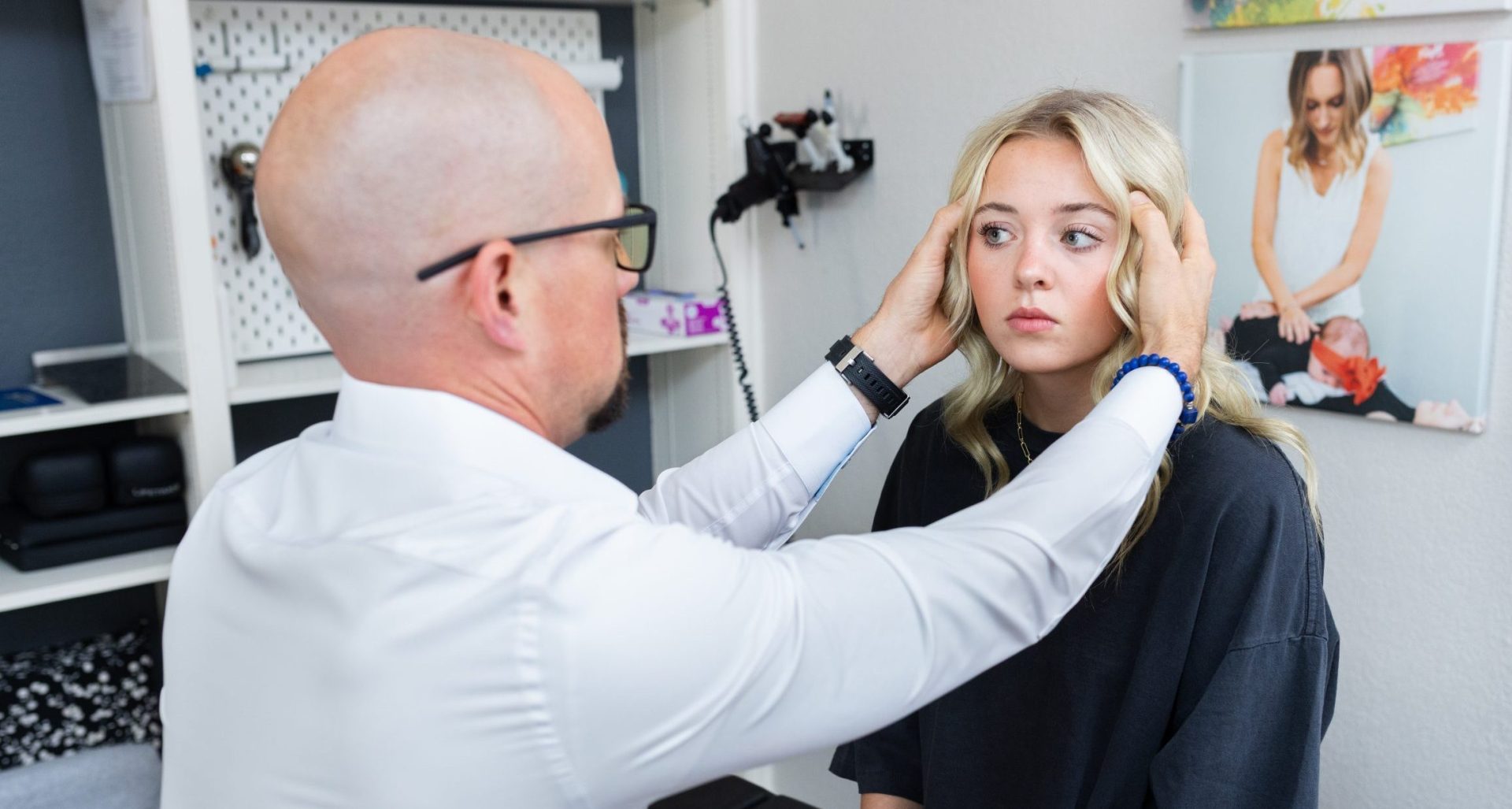
Functional neurology examines how different areas of the nervous system are performing and communicating. Instead of relying on symptoms alone, we look for patterns involving eye movement, balance, coordination, posture, sensory processing, and motor control.
When appropriate, care may include targeted eye movements, balance exercises, sensory stimulation, movement-based rehabilitation, vestibular exercises, chiropractic care, and other patient-specific therapies.
Each plan is based on the patient’s presentation, tolerance, history, and functional goals.
Vestibular Rehabilitation
The vestibular system works closely with the eyes, brain, muscles, and joints to help a person maintain balance and understand where their body is in space.
Vestibular rehabilitation may be appropriate for patients experiencing dizziness, vertigo, imbalance, motion sensitivity, visual disorientation, or difficulty stabilizing their gaze. Rehabilitation exercises are selected and progressed based on the patient’s specific findings and response to care.


Neuro-Ophthalmology-Informed Assessment
Vision involves much more than eyesight. The brain must control eye movements, maintain visual focus, process motion, and coordinate visual information with balance and body movement.
Dr. Joe’s training in neuro-ophthalmology informs the assessment of functional eye movement patterns that may be associated with concussion symptoms, dizziness, headaches, poor concentration, reading difficulties, or sensitivity to visually busy environments.
This assessment does not replace a comprehensive examination by an ophthalmologist, neuro-ophthalmologist, or other medical specialist when one is required. It helps our team understand how visual and neurological function may be affecting the patient’s symptoms and rehabilitation.
Advanced Diagnostic Technology and Coordination
Complex cases often require more than a basic orthopedic or neurological screening. Calibration uses technology assisted clinical assessments to evaluate functional patterns and establish measurable baselines.
When imaging or medical testing is needed, we can coordinate with appropriate outside providers for services such as MRI, MRA, X-ray, or other diagnostic evaluations. Patients are also referred to medical specialists when a concern falls outside our scope of practice.
Infrared Video Goggles (Video Frenzels)
For patients with dizziness or vertigo, one of the most important early questions is where the problem is coming from. Infrared video goggles often called video Frenzels, allow our team to observe and record eye movements in complete darkness, removing the visual fixation that can suppress or mask abnormal eye movement patterns.
This assessment helps evaluate nystagmus and other eye movement findings associated with conditions such as BPPV (benign paroxysmal positional vertigo), other inner ear dysfunction, and central vestibular involvement. Because the eye movements are recorded, findings can be reviewed, documented, and compared over the course of care.
Video goggle findings help guide which vestibular treatments and rehabilitation strategies are appropriate for example, distinguishing a patient who needs a repositioning maneuver from one who needs gaze stabilization or central vestibular rehabilitation.
BTrackS Balance Tracking Force Plate
Balance problems are easy to report but difficult to measure by observation alone. The BTrackS (Balance Tracking Systems) force plate provides an objective, validated measurement of postural sway and balance performance.
Patients stand on the plate while it records subtle shifts in their center of pressure, producing quantifiable balance data that can be compared to normative values. This helps our team identify balance deficits that a standard visual screening may miss, establish a measurable baseline at the start of care, track objective change as rehabilitation progresses, and document balance performance for referring physicians and attorneys.
Objective balance data is particularly valuable in concussion, vestibular, and injury cases, where demonstrating measurable functional change matters to the patient, the referring provider, and the overall record of care.
RightEye Technology
RightEye is a computer-based eye tracking system that helps assess how the eyes and brain work together during visual tasks. It can provide information about eye movement patterns, visual tracking, gaze stability, and dynamic visual performance.
These findings may help guide rehabilitation for patients experiencing concussion symptoms, headaches, dizziness, motion sensitivity, reading difficulties, or problems with visual focus. RightEye assessments can also provide repeatable measurements that help the clinical team monitor functional changes over time.
RightEye does not replace a standard eye examination or independently diagnose a neurological condition. It is one component of a broader clinical evaluation.
What Patients Can Expect
1. Comprehensive History
We begin by reviewing the patient’s symptoms, health history, previous injuries, medical evaluations, treatments, and current functional limitations.
2. Detailed Clinical Evaluation
The evaluation may include neurological, musculoskeletal, vestibular, balance, coordination, visual, and movement-based assessments. Technology such as infrared video goggles, the BTrackS force plate, and RightEye may be included when appropriate.
3. Personalized Care Plan
Findings are used to create a plan tailored to the patient’s presentation, goals, and tolerance. Care may combine several therapies rather than relying on a single technique and address neurological and musculoskeletal findings together within the same plan.
4. Progress Tracking
The patient’s response is monitored throughout care. Functional assessments will repeated when appropriate to measure change and guide adjustments to the rehabilitation plan.
5. Collaborative Referrals
If additional imaging, medical evaluation, or specialty care is needed, we refer the patient to an appropriate provider. Our role is to contribute to a coordinated care process, not to replace necessary medical treatment.
Physician Referrals
Calibration welcomes referrals from physicians and other healthcare professionals who need an additional rehabilitation option for patients with persistent or overlapping neurological, vestibular, visual, and musculoskeletal symptoms.
We may be an appropriate referral option when a patient:
- Continues to experience symptoms after initial treatment
- Requires vestibular or neurological rehabilitation
- Has symptoms involving balance, vision, movement, and pain
- Needs a structured, individualized rehabilitation plan
- Would benefit from technology-assisted functional assessment, including objective balance and eye movement testing
- Has combined neurological and musculoskeletal needs that would otherwise require multiple providers
- Requires care that complements an existing medical treatment plan
With the patient’s authorization, our team can communicate relevant findings and progress information to support continuity of care.

Attorney Referrals
Injury cases can become more complicated when a patient experiences persistent dizziness, headaches, visual symptoms, cognitive complaints, balance problems, pain, or functional limitations after an auto accident.
Calibration provides detailed evaluations, personalized care plans, clinical documentation, progress tracking, and appropriate coordination with imaging centers and other healthcare professionals. Because both neurological and musculoskeletal care are delivered in one clinic, the client’s record reflects a single, consistent course of care rather than fragmented treatment across multiple offices.
For attorneys, this means the client’s care is supported by a structured clinical process that documents:
- The patient’s reported symptoms and functional limitations
- Relevant examination findings, including objective balance and eye movement measurements
- The recommended plan of care
- Referrals for additional diagnostics or specialty evaluation
- The patient’s participation and response to care
- Functional progress throughout rehabilitation
Our clinical decisions remain based on the patient’s healthcare needs and findings.

For Patients Searching for Answers
If you have seen multiple providers but continue to experience symptoms, it does not necessarily mean that nothing is wrong or that improvement is impossible. It may mean that your case requires a different perspective or a more integrated rehabilitation approach.
At Calibration, we take the time to understand how your symptoms affect your daily life and how different systems may be contributing to what you are experiencing. If your needs fall outside our scope, we will explain that clearly and help direct you toward an appropriate provider.
Schedule Your Initial ConsultationWhy Professionals and Patients Choose Calibration
- Advanced education in applied clinical neuroscience
- Neurological and musculoskeletal care under one roof
- Experience with neurological and musculoskeletal complexity
- Vestibular and balance rehabilitation
- Neuro-ophthalmology-informed clinical assessment
- Infrared video goggle (video Frenzel) vestibular assessment
- BTrackS force plate objective balance testing
- RightEye dynamic vision technology
- Personalized functional neurology protocols
- Technology-assisted progress tracking
- Coordination with imaging centers and medical specialists
- Clear documentation for referring professionals
- Patient-specific, non-invasive rehabilitation plans

Frequently Asked Questions
A More Complete Approach to Complex Care
Complex cases require curiosity, precision, and a willingness to look beyond a single symptom or body system.
Calibration Brain + Body brings together advanced clinical neuroscience training, vestibular rehabilitation, functional neurology, dynamic vision assessment, objective balance testing, and personalized rehabilitation With neurological and musculoskeletal care delivered under one roof to help patients better understand their symptoms and move forward with an appropriate plan.
Schedule a Consultation