
 October 8, 2026
Red Light Therapy vs. Laser Therapy: What’s the Difference?
Written by Dr. Joseph Adams, D.C., M.S. Applied Clinical Neuroscience
If you have seen red light masks, full-body panels, infrared beds, handheld devices, and therapeutic lasers, you may have wondered: Isn’t it all basically the same red light?
That is a reasonable question. These devices can use similar parts of the light spectrum, and many fall under the broader concept of photobiomodulation.
But that does not mean they deliver the same treatment.
The wavelength of light matters, but it is only part of the equation. Power, energy dose, treatment time, treatment area, and the way that energy is delivered can all change what reaches the target tissue.
This is why a consumer red light panel, a Class 3B therapeutic laser, and a Class IV therapeutic laser should not automatically be considered interchangeable.
The goal is not simply to use “more red light.” The goal is to choose the appropriate type and dose of light for the tissue and clinical objective.
What Is Photobiomodulation?
Photobiomodulation is the use of specific wavelengths of red and near-infrared light to produce biological effects in the body.
You may also hear terms such as red light therapy, low-level laser therapy, or therapeutic laser used when discussing this general area of treatment.
The basic concept is that light energy can interact with cells and influence biological processes associated with things such as tissue repair, circulation, inflammation, and pain modulation.
But there is an important detail:
Wavelength alone does not determine the treatment dose.
Think about medication for a moment. Knowing the name of a medication does not tell you the entire treatment—you also need to know the dose.
Light therapy has a similar principle.
Two devices may produce light at similar wavelengths while delivering very different amounts of energy to the tissue.
Red Light Therapy: What Are Most People Using?
When most patients talk about “red light therapy,” they are referring to LED-based devices.
These may include:
- Red light masks
- Handheld devices
- Wraps or pads
- Large LED panels
- Full-body red light beds
These devices typically use red and/or near-infrared wavelengths and can expose a relatively large area of the body to light.
That large treatment area can be one of their defining characteristics. A facial mask covers much of the face. A large panel may illuminate a significant portion of the body. A red light bed can expose nearly the entire body at once.
However, seeing red light does not tell you how much energy is actually being delivered.
Several factors matter, including wavelength, power, irradiance, treatment distance, exposure time, treatment area, and total energy delivered.
That is one reason comparing devices based only on wavelength—or how bright the light looks—can be misleading.
What Is a Class 3B Therapeutic Laser?
A Class 3B therapeutic laser is different from a typical LED red light device.
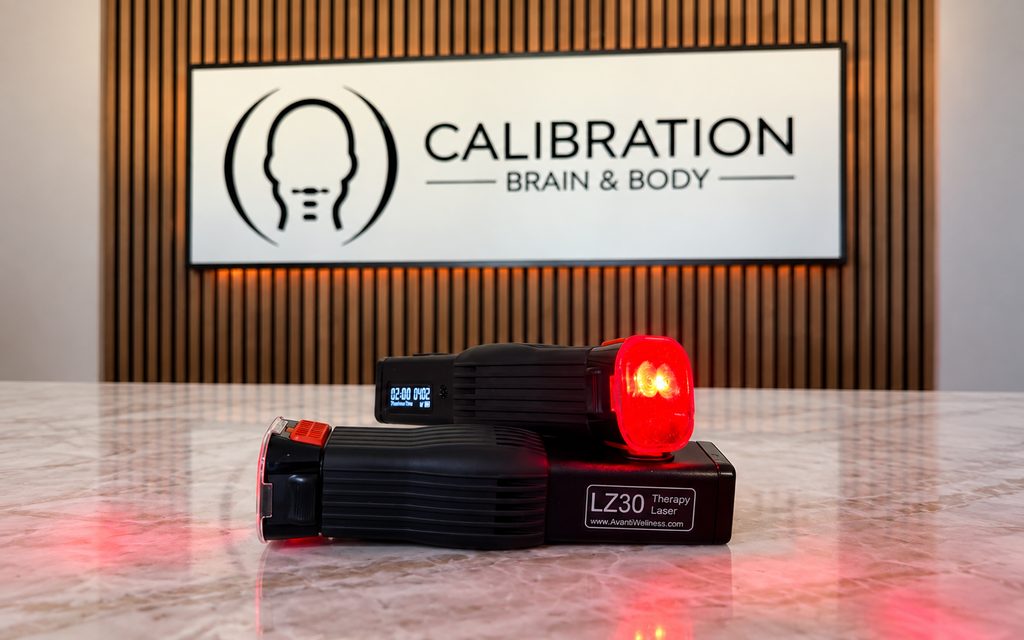
Rather than using an array of LEDs to illuminate a broad area, the Class 3B laser used at Calibration Brain & Body uses laser diodes that allow us to apply light to a more specific treatment target.
That could include a particular:
- Muscle
- Tendon
- Joint
- Soft-tissue region
- Area incorporated into a neurological or rehabilitation protocol
At Calibration, Class 3B laser may be incorporated into certain neurological and rehabilitation plans, including care involving concussion, dizziness, vestibular dysfunction, balance, and coordination.
This does not mean that every patient with one of these conditions needs laser therapy.
It means the laser is one tool that may be considered when the patient's evaluation and treatment goals make it appropriate.
Depending on the application, treatment parameters can be selected based on the target area and intended dose.
That is an important distinction.
Rather than thinking of Class 3B laser as simply a “stronger red light,” it is more useful to think of it as a different delivery tool that allows for a more targeted application.
What Is a Class IV Therapeutic Laser?
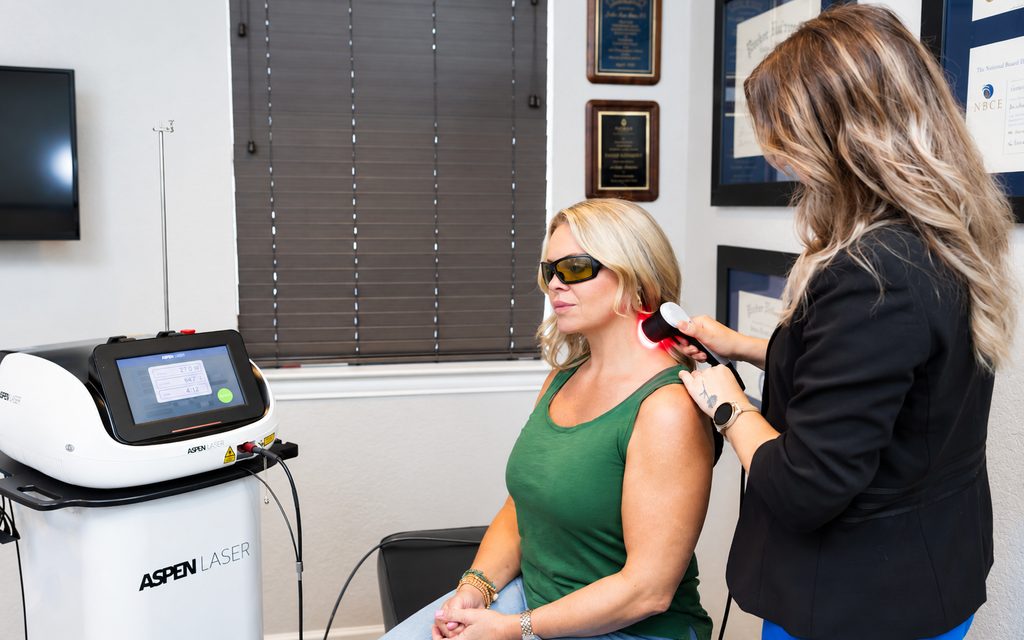
Class IV therapeutic lasers operate at a higher power level.
Class 3B lasers are limited to 500 milliwatts, or 0.5 watts, of output, while Class IV lasers operate above that threshold. This allows a Class IV system to deliver substantially more energy over a given period of time.
At Calibration Brain & Body, Class IV laser may be incorporated into musculoskeletal treatment plans involving concerns such as:
- Joint pain
- Muscle pain
- Strains and sprains
- Tendon irritation
- Acute soft-tissue injuries
- Chronic soft-tissue conditions
The higher power can also allow the desired energy dose to be delivered over a shorter treatment period in appropriate applications.
But there is an important point here:
Higher power does not automatically mean better treatment.
A Class IV laser is not automatically “better” than a Class 3B laser, just as a Class 3B laser is not automatically the right choice simply because it is more targeted than a large LED panel.
They are different tools.
The appropriate choice depends on what is being treated and what the clinician is trying to accomplish.
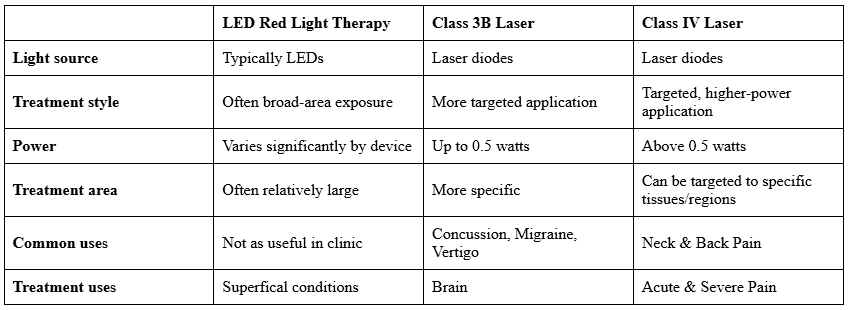
Red Light Therapy vs. Class 3B vs. Class IV Laser
Here is a simple way to think about the differences:
Does More Powerful Laser Therapy Work Better?
Not necessarily.
This is one of the easiest misunderstandings to make when comparing light-based therapies.
If one device produces more power than another, it can be tempting to assume that more power must produce a better result.
Treatment does not work that simply.
The therapeutic dose depends on several factors working together, including how much energy is delivered, how quickly it is delivered, the size and location of the treatment area, and the clinical goal.
More is not automatically better.
Neither is less.
The goal is the appropriate dose for the appropriate target.
Why Evaluation Matters Before Laser Therapy
Someone with shoulder pain, someone recovering from an ankle sprain, and someone undergoing neurological rehabilitation may have completely different needs.
Even two people with pain in the same location may not have the same underlying problem.
This is why the evaluation matters.
At Calibration Brain & Body, we do not want to choose a treatment simply because a particular technology is available.
The goal is to determine what structures or systems appear to be contributing to the patient's symptoms and then decide which treatment options make sense based on those findings.
Depending on the patient, an evaluation may include neurological, orthopedic, movement, balance, vestibular, or other functional testing.
The goal is not to guess.
How We Use Therapeutic Laser at Calibration Brain & Body
Therapeutic laser is not treated as a stand-alone answer to every problem.
Instead, it may be incorporated into a broader treatment plan when the findings indicate it is appropriate.
For a musculoskeletal problem, for example, care might also involve chiropractic care, soft-tissue therapy, rehabilitation exercises, or other strategies.
For a neurological or vestibular patient, a Class 3B laser may be one component of a broader program that could include functional neurology, vestibular therapy, ocular rehabilitation, balance training, or other targeted exercises.
The specific combination depends on the individual.
Specific findings should lead to specific care.
What Should You Expect From Therapeutic Laser?
Individual results vary.
The response depends on many factors, including the condition being treated, how long it has been present, the tissue involved, the treatment parameters, and what else may be contributing to the problem.
Some patients may have relatively straightforward musculoskeletal injuries. Others have several overlapping factors that need to be addressed.
Laser therapy may be useful as part of care, but it does not replace the need to identify what is actually causing or maintaining the patient's symptoms.
When the diagnosis is right, treatment can become much more specific.
Is a Home Red Light Device the Same as Clinical Laser Therapy?
No—not necessarily.
A home LED panel or red light mask and a therapeutic laser may use overlapping wavelengths, but that does not make their output or application equivalent.
Differences can include:
- Power
- Irradiance
- Total energy delivered
- Treatment area
- Distance from the tissue
- Treatment duration
- Delivery method
- Intended clinical use
This does not mean a home red light device is automatically ineffective.
It means you should not assume that two devices provide equivalent treatment simply because both produce red or near-infrared light.
Is Therapeutic Laser Right for Every Condition?
No.
Sometimes another form of care is more appropriate. Sometimes laser may be used alongside other treatment. And sometimes it may not be indicated at all.
For example, pain that feels muscular could potentially involve a joint, tendon, nerve, disc, or another structure. Dizziness or post-concussion symptoms may involve different combinations of the vestibular system, eyes, neck, balance system, and nervous system.
Sometimes symptoms overlap.
Getting the right diagnosis is the first step.
The Bottom Line: Similar Light, Different Tools
Red light therapy, Class 3B laser, and Class IV laser can all involve wavelengths within the red or near-infrared spectrum.
But that does not make them the same treatment.
The wavelength, power, dose, treatment time, target area, and method of delivery all matter.
At Calibration Brain & Body, we do not use Class 3B and Class IV lasers interchangeably simply because both are therapeutic lasers. They may be selected for different purposes based on the patient, tissue, treatment area, and clinical goal.
Same general light spectrum. Different technology. Different doses. Different applications.
Considering Laser Therapy in Mansfield, TX?
At Calibration Brain and Body in Mansfield, we perform detailed neurological, vestibular, and/or orthopedic assessments to determine what is actually contributing to your symptoms. If appropriate, we build a care plan based on your specific findings rather than guessing.
Depending on those findings, therapeutic laser may be one part of that plan.
Calibration Brain and Body
408 South Main Street, Suite B
Mansfield, TX 76063
(817) 779-3435
We see patients from Mansfield, Arlington, Grand Prairie, Midlothian, and surrounding communities.
Frequently Asked Questions
Is therapeutic laser the same thing as red light therapy?
Not exactly. Both can fall under the broader concept of photobiomodulation and may use red or near-infrared wavelengths. However, LED red light devices and therapeutic lasers can differ substantially in their power, energy delivery, treatment area, and intended application.
What is the difference between a Class 3B and Class IV laser?
Class 3B therapeutic lasers operate at up to 500 milliwatts (0.5 watts), while Class IV lasers operate above that threshold. Higher-powered Class IV systems can deliver more energy over a shorter period, but that does not automatically make them the better choice for every application.
Is Class IV laser better than Class 3B?
Not necessarily. They are different tools that may be selected for different treatment goals. The appropriate choice depends on the target tissue, desired dose, treatment area, and individual clinical findings.
What is photobiomodulation?
Photobiomodulation describes the use of specific wavelengths of light to influence biological processes within the body. Red and near-infrared light are commonly used for this purpose.
Can therapeutic laser help with pain?
Therapeutic laser may be incorporated into care for certain musculoskeletal pain and soft-tissue conditions. Whether it is appropriate depends on what is causing the symptoms, which is why an evaluation should come before choosing treatment.
Do you use laser therapy for concussion or dizziness?
At Calibration Brain & Body, Class 3B laser may be incorporated into certain neurological and rehabilitation protocols, including care involving concussion, dizziness, vestibular dysfunction, balance, and coordination. It is not automatically appropriate for every patient, and treatment is selected according to the patient's evaluation and clinical goals.
Can I get the same treatment from a red light panel at home?
You should not assume that a home LED device provides the same treatment as a clinical therapeutic laser. Even when wavelengths overlap, power, irradiance, total energy, treatment area, and delivery can differ substantially.
Disclaimer
This article is for educational purposes only and is not a substitute for medical advice, diagnosis, or emergency care. Treatment recommendations should be based on an individual evaluation. If you are experiencing severe or sudden symptoms, seek urgent medical attention.